I moved into this quiet neighborhood six months ago because I wanted boring. Beige walls. HOA emails about trash cans. The kind of anonymity you get from being “the quiet guy at 402.” After twenty years in places nobody vacations, I thought my biggest battle would be keeping the hydrangeas alive.
But you don’t really switch it off. The vigilance. The way your eyes check corners without permission. One afternoon I was on my front steps with a cup of black coffee gone cold, watching sunlight crawl across the street, when I saw them.
Four teenagers, loud and confident in that way that comes from never facing consequences. They walked down the middle of the road like they owned the zip code. I recognized the leader—sixteen, expensive haircut, the kind of kid who speeds his father’s car past “Children at Play” signs.
Then I saw the dog.
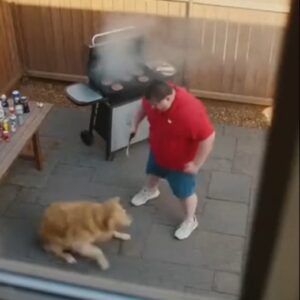
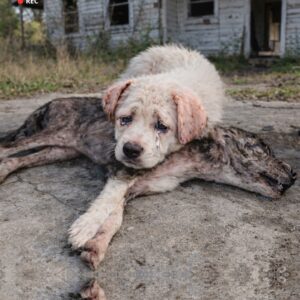
A small, wiry mutt—shaking, tail tucked, not barking, not running. Just trying to disappear. The kid in the red hoodie whistled, sharp and mean. The dog hesitated. The kid lunged, grabbed it by the scruff, and the dog yelped. His friends lifted their phones, laughing like cruelty was entertainment.
I told myself to stay seated. Not my problem. Not my business.
Then the kid shifted his grip and grabbed the dog by its tail. The sound the animal made wasn’t noise—it was pain. Real, raw pain. And the kid started swinging it, building momentum, standing a few steps from the intersection where cars flew by.
He was going to throw it into traffic for a ten-second video.
I didn’t decide to move. My body just did. I set the coffee down and crossed the lawn—not running, just walking with purpose. I closed the distance before they even noticed.
As he swung forward, I stepped off the curb and caught his wrist at the top of the motion. Not a punch—just a clamp. I held him still.
“Drop it,” I said, calm enough to be terrifying.
He tried to yank free. I didn’t let him. I pressed a nerve point above his wrist, the kind that makes your hand obey before your ego can argue. His fingers opened. The dog hit the asphalt, scrambled, and bolted into a hedge down the street.
Safe.
The bravado on the kid’s face cracked. “Do you know who my dad is?” he snapped, voice shaking now.
I didn’t answer. I just guided his arm behind his back and forced him down—geometry, not rage. The laughter stopped. The phones lowered. His friends suddenly understood they weren’t dealing with another neighbor.
“You think pain is funny?” I asked, voice flat. “You like watching things suffer?”
“It was a joke!” he cried.
“Cruelty isn’t a punchline,” I said. “If I ever see you hurt an animal—or anyone smaller than you—again, you won’t get a warning.”
I let him go. He backed away, clutching his wrist, humiliated. His friends started recording again, already shaping a story where I was the villain and they were the victims.
I walked back to my porch, picked up my coffee, and took a bitter sip. The dog was gone. The kids were gone. But the silence felt different—like a fuse burning.
I locked my door. I didn’t regret saving the dog.
I regretted how easily this world protects the people who enjoy hurting what can’t fight back.