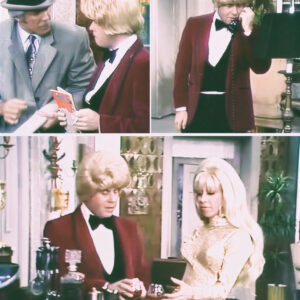
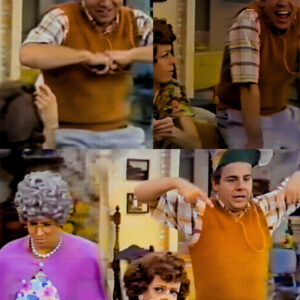
There was a quiet truth backstage on The Carol Burnett Show: if Tim Conway was in the sketch, rehearsal only went so far.
The writers could polish every line. Blocking could be flawless. Timing could be drilled down to the second. None of it guaranteed safety—especially for Harvey Korman, a performer who thrived on structure, precision, and control.
One night, the setup was familiar and dependable. Harvey knew the rhythm so well he could feel the punchlines coming. The audience settled in, ready for laughter that followed rules: setup, payoff, release.
Then Tim entered. No signal. No warning. Just presence.
The scene rolled on exactly as rehearsed—until it didn’t.
Without changing his tone or expression, Tim added a single detail that belonged nowhere. It didn’t move the plot or explain anything. It simply existed—awkward, unnecessary, and lethal.
You can spot the moment if you watch closely. Harvey stiffens. His smile freezes. His mind searches for logic, for a rule that can absorb what just happened. There isn’t one. Tim hasn’t broken the rules; he’s ignored them.
From there, the ground disappears. Harvey tries to continue, but the sketch has lost gravity. The audience feels it instantly. The laughter shifts from polite to electric.
Harvey turns away, collapses, and laughs—real, uncontrollable laughter. Tim stays calm, letting the moment breathe, letting the sketch transform into something alive.
Later, Harvey admitted those moments terrified him—not because Tim was unpredictable, but because he was exact.
And that’s why the smartest comedians feared him.