It was afternoon. The cars had lined up on the bridge, one behind the other, a banal traffic jam that no one really paid attention to anymore. People were looking at their phones, listening to music, already mentally at where they were going.
Then they saw them.
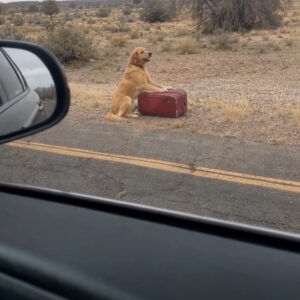
About twenty dogs, sitting or standing, in the middle of the bridge, about fifty meters from the first car. They were arranged as if they formed a barrier.
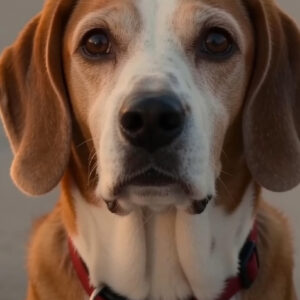
At the front, a dog stood slightly back from the others, its head held high, its gaze fixed on the vehicles.
And they were crying. High-pitched, long, tense moans that mingled with the air and seeped into you without asking permission.
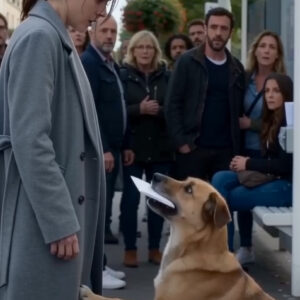
People started getting out of their cars. First one, then three, then many more. They stood frozen near their doors, their faces marked by disbelief and bewilderment.
No one knew what to do.
The dogs wouldn’t leave. They looked at people as if they wanted to say something, but could only utter these heartbreaking complaints.
Then, in the silence and uncertainty, a man opened his door, went out, and stopped in front of all the others.
He watched the dogs for a long time. Then he turned to the people and said:
“I will approach them.”
This man’s name was Marcos. He was not a professional driver, nor an animal rescuer.
When he said he was going to approach, a woman next to him grabbed his arm. She said nothing, just looked into his.
This look contained a whole sentence: “be careful”, but also “I am with you”. Marcos nodded slightly and began to move forward slowly.
This man’s name was Marcos. He was not a professional driver, nor an animal rescuer. It was simply a man who had left his house that morning to buy paint, because he had promised to repaint the balcony railing during the summer. He still had traces of paint on his hands, remnants of a test three days earlier, when he had decided to start before finally postponing.
That detail now seemed absurd to him: those shards of paint on his fingers as he stood on that bridge, facing twenty crying dogs.
When he said he was going to approach, a woman next to him grabbed his arm. She said nothing, just looked into his.
This look contained a whole sentence: “be careful”, but also “I am with you”. Marcos nodded slightly and began to move forward slowly.
He kept his hands empty, his palms open, his step slow and predictable. He didn’t know if this was the right way to act, but something whispered to him that he had to show that he posed no threat. At every step he felt the eyes of others behind him, heavy, silent, tense.
No one moved. Even the wind seemed to have stopped.
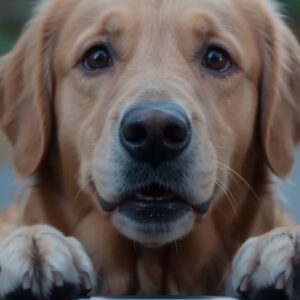
The leading dog, the one that stood slightly in front of the others, remained motionless. His body was tense, his ears erect, but his tail was not curled up. He didn’t run away, but he didn’t growl either. He looked Marcos straight in the eye with such gravity that it seemed as if he was trying to read his mind.
Marcos stopped about three paces away. He went no further. He bent his knees to get up to her level, so that his gaze did not dominate that of the dog.
This simple gesture changed everything. The dog’s ears lowered slightly, and his breathing, which had been short and jerky until then, suddenly became calmer.
“I’m listening to you,” Marcos murmured, though he didn’t know if the dog understood the words or not. He spoke as one would speak to a frightened child, who does not yet know whether he will be heard. “I don’t know what happened, but I’m here. We are all here.
The dog wagged his tail slightly. Not out of joy, but as if a tiny crack had just opened in his tension. Behind him, the other dogs began to change their attitudes, one by one, slowly. Some sat down, others tilted their heads to the side.
Their complaints became shorter, more choppy, as if something in them dared to believe that this stranger could help them.
Footsteps were heard behind him. Marcos didn’t turn around, but he felt that several people had approached. They stood five or six paces behind him. No one spoke, but their presence created a kind of protective circle.
It was then that the lead dog took a step forward. Then another. He approached Marcos until he could touch his hand. Marcos didn’t move, continuing to stare at his eyes.
The dog paused for a moment, then slowly lowered his head and placed it on Marcos’ open palm.
It was one of those moments that seem to suspend time. There were dozens of people on the bridge, but no one was breathing. This little dog with a dusty coat, slightly protruding ribs, a look where fatigue and something else were mixed – a trust, the kind that comes when there is nothing else left.
Marcos’ eyes mist. He felt the weight of the dog’s head warm his palm, and that simple touch told him more than a thousand words could have.
“It’s all right,” he murmured, “now we’re together.”
With a soft, very slow hand, he put his fingers behind the dog’s head and began to stroke it lightly. The dog did not shrink. On the contrary, he leaned a little more against that hand, and a wave of tension left his body, the same one that had kept him standing for so long.
The other dogs began to approach.
Not all at once, but slowly, hesitantly, one by one. First a large dog with a light grey coat, then a small black one with a half-broken ear, then another, then another. Soon, Marcos found himself surrounded by them, not in a threatening way, but as children would surround an adult in whom they have finally found someone they trust.
Behind him, a young woman with eyes already full of tears approached slowly and sat on the floor next to Marcos. She reached out her hand to a dog that had remained behind, and the dog let it happen.
This gesture seemed to serve as a signal. The people approached one by one, sat down, whispered a few words, held out their hands. No one rushed, no one spoke loudly.
On deck there was an unusual silence, not empty, but filled with something new. It was like those silences that come after a long wait, when something has finally happened, and you understand that nothing will be quite the same again.
When all the dogs were surrounded, when some lay down on the asphalt, when others drank water that someone had fetched from his car, Marcos noticed that the lead dog was looking at him in a way that had nothing to do with fear. There was gratitude in that look, but also something else – as if the dog was trying to tell him, “I knew you were coming.”
Later, when the competent services were called, when the dogs began to be taken to a safe place, when the bridge gradually became free, Marcos remained seated on the still warm asphalt. Beside him, with his head resting on his knees, the same dog that had approached first was breathing peacefully.
A man whose name he didn’t know approached and silently placed a bottle of water next to him. A woman, her eyes still shining with tears, sat down on the other side and began to pet a sleeping dog against her feet.
“How did you know?” the woman finally asked Marcos.
Marcos remained silent for a long time. He looked at the dog, who opened his eyes, stared at him, and then closed them again.
“I didn’t know,” he said at last. “It’s just that…” When I met their eyes, I understood that they had not blocked the road. They had stopped there because they had nowhere else to go. And someone had to be that place for them.
That night, when it was all over, when the dogs had been put in a temporary shelter, when Marcos had returned home, he sat on the balcony and looked at the bare railing, the one he hadn’t repainted that day. He still had traces of paint on his hands, but also other traces, those that no soap could ever erase.
The next morning, he was awakened by a call. It was the refuge. He was told that the lead dog, whom they had already nicknamed “Bridge,” refused to eat, that he kept looking at the door and did not move from his seat. He was asked if he could come.
Marcos came. When he entered the room, Pont stood up, approached, sat slowly at his feet, and for the first time accepted food directly from his hand.
That day, Marcos decided that the balcony railing could wait. He would come back every day, until Bridge understood that he would never need to block any roads again, because he had finally found his home.
A month later, as Pont was running with Marcos in the park, no longer afraid of cars, without crying anymore, a little girl approached them and asked:
“Is that your dog?”
Marcos looked at Pont. The dog looked at him, then at the little girl, then at Marcos again, and his tail began to wag with such vigour that his whole body was shaken by it.
“Yes,” said Marcos, smiling. “He’s my dog.”
Pont rushed up to the little girl, barked softly, then returned to Marcos and sat at her feet, his head held high, his eyes now free of all fear, inhabited by that boundless trust that comes when someone, one day, has chosen not to go his way.
And if someone ever tells you this story, you’ll be told that on that day, on the bridge, twenty dogs had blocked traffic.
But you will also be told that a man knelt before them, and that from that moment there was a little more kindness in the world than there was the day before.